
The Long Game
There's a version of my childhood that never happened.
In it, I grew up somewhere west of everything — a ranch maybe, or close enough to one that it counted. My father taught me to rope before I could ride a bike. Every summer we hitched up the camper and drove to the county fair, where the heat came up off the asphalt in waves and the smell of funnel cake and livestock mixed into something you could only call August. I got pretty good with a lasso. Not good enough to compete, but good enough that people stopped to watch.
None of that is true. I grew up in Connecticut. But the version that isn't true keeps showing up in the paintings.
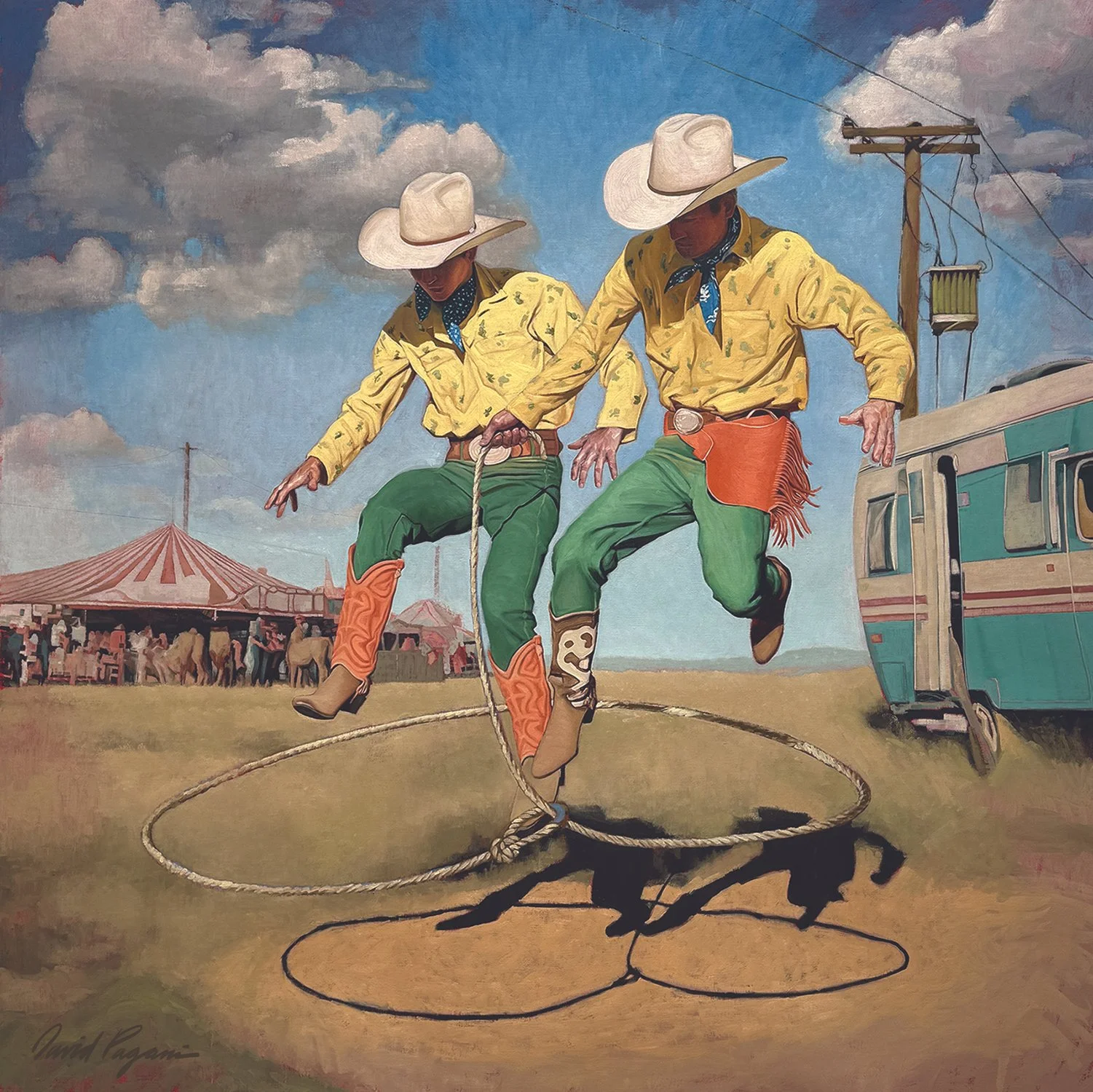
Bright Future | 50 × 50 in. | Oil on Linen
Bright Future started with a question I couldn't stop asking: what would it have been like? What if the myth were mine — not borrowed from movies and paperback covers, but lived, passed down, carried forward? Two cowboys, a father and son, performing a rope trick together at what appears to be a county fair. In the background, a carnival tent. At the edge of the frame, an old camper — the kind that suggests a life spent close to the ground, moving with the seasons.
The painting sold before I finished varnishing it.
The collector who took it home used to own a large ranch here in New Mexico. She told me it reminded her of the world she grew up in. Which means the imaginary version of my childhood looked enough like her actual one that something in the painting rang true. I find that both satisfying and a little mysterious, which is about the right combination for a painting to produce.
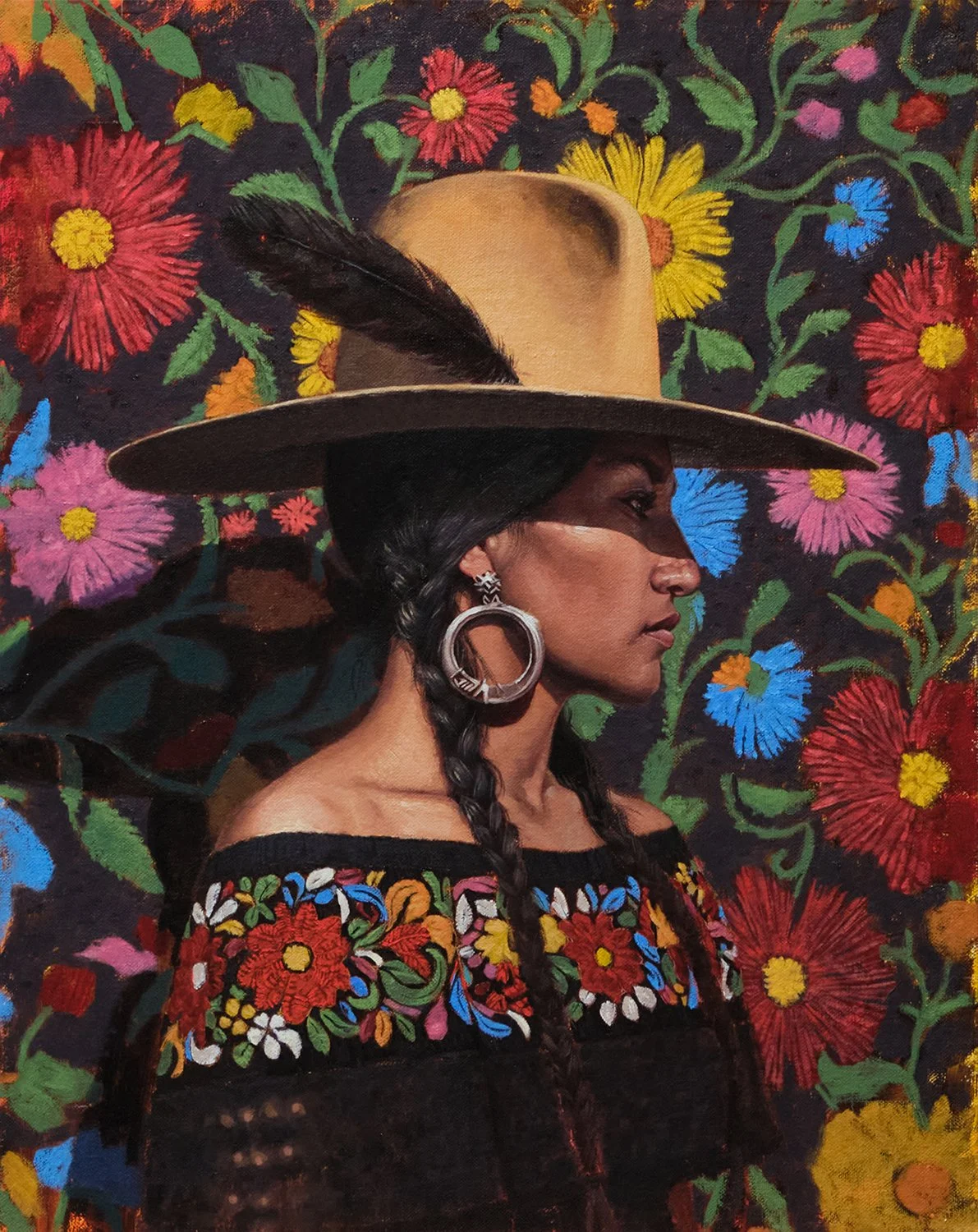
Povi | 16 × 20 in. | Oil on Linen
Povi is a different kind of painting — quieter in subject, louder in surface. The name is Tewa for "flower." She is the newest finished piece, and she belongs to the same investigation as the rope trick paintings — assembled from many sources, sketches, and studies until someone specific emerged from the composite. Invented, but not fictional. The imagined West is not the only West worth painting. There is also this one: particular, grounded, and not going anywhere.
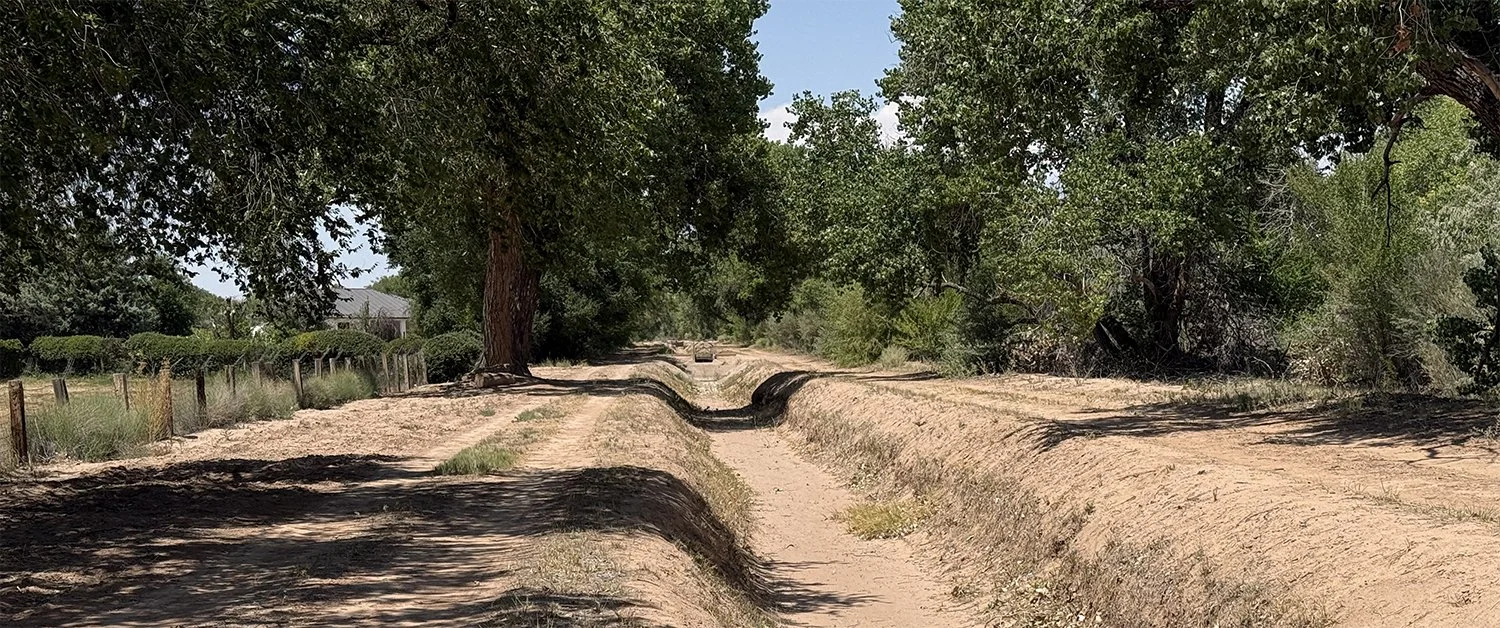
Out here in August, the romantic version of the West doesn't hold up for long. When the temperature reaches 105, the air burns your lungs. Shade becomes a serious consideration. The Rio Grande near my studio in Corrales is almost dry — a thin thread of brown water moving through a wide sandy bed that remembers being a river. The cottonwoods are doing their best.
The myth and the reality have always been in conversation. The myth is cinematic, wide-angle, golden-lit. The reality is that you drink a lot of water and try to paint before noon. My paintings live somewhere in that gap — affectionate toward the mythology, honest about the heat.
The work I'm making now is slower and more deliberate than anything I've done before. I'm building a series — the Rope Tricks paintings — with a specific body of work in mind, and I've decided not to sell pieces out from under it before it's complete. That requires a certain kind of patience that doesn't come naturally to me, and probably doesn't map well onto a cultural moment that rewards the quick and the constant.
I'm 56. I came to this full-time, as a primary pursuit, later than most people do. The long game is the only one that makes sense from where I'm standing. Not because I'm in a hurry to make up for lost time — I've mostly made my peace with the detour — but because the work I want to make takes the time it takes. A rope trick painting isn't finished until it's finished. And a body of work isn't a body of work until it has a body.

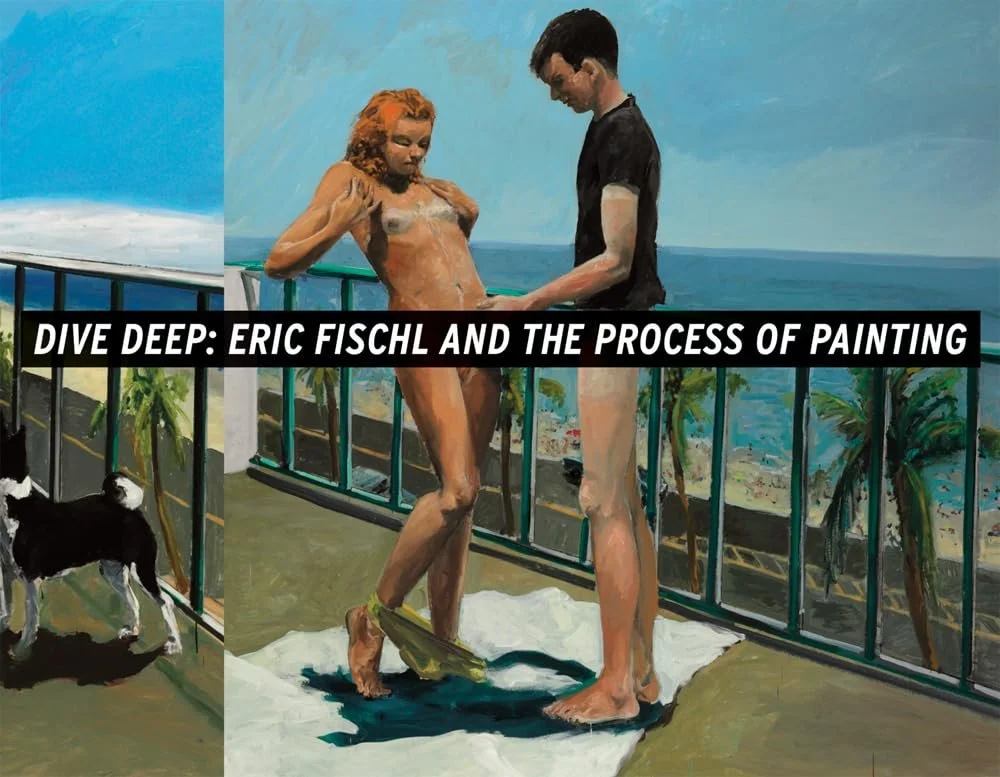
On the Studio Floor
Among the art books stacked next to my easel is Deep Dive: Eric Fischl and the Process of Painting.
