
There’s a new painting on the easel, and she hasn’t touched the ground in weeks. Squinting into the light, waiting for her name to be called.
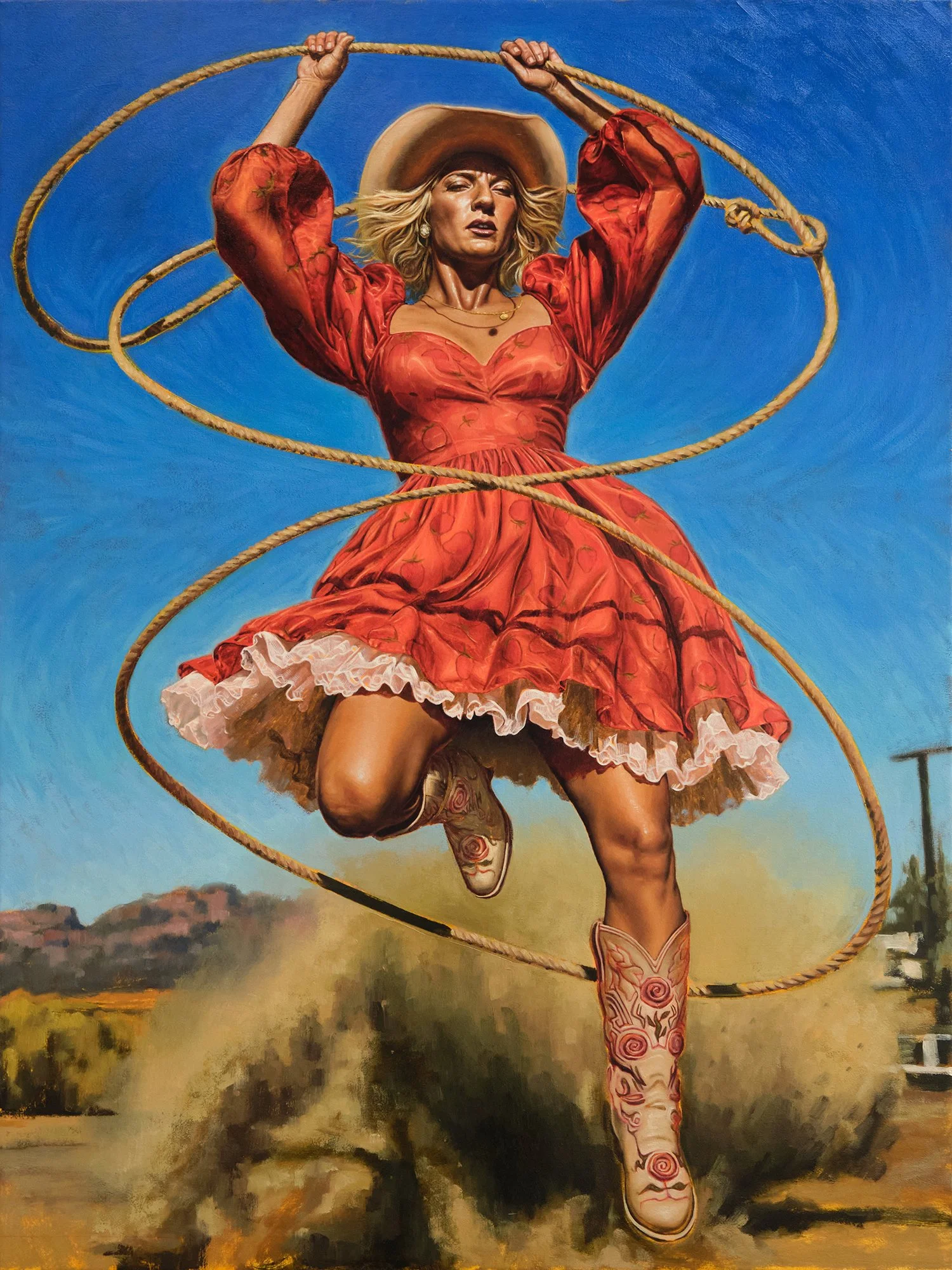
Figure Eight | 30 × 40 in. | Oil on oil paper panel
She isn’t real in the literal sense. Like most of my western figures, she’s assembled from a stack of reference photos and sketches, cut apart and put back together until she speaks to me — until she is real. One of my inspirations for this woman is Sierra Ferrell, whose vibrant stage costumes have always struck me as the right instinct about the West: that it was never plain. The dress is a nod to a strawberry-print one she wore in concert.
I’ve never been good at choosing. The landscape here is incredible, and I could spend the rest of my life on purple mountains and cottonwoods. But I keep getting pulled to the seam, where the West we were sold runs into the West that actually works for a living: cinderblock, power poles, dirt lots. That seam starts to look like a stage, and the people on it start to look like players. She’s one of them, a rodeo queen out behind the fairgrounds, showing off for nobody. At least, that’s the story I’m still working out.
The trick is invented too. The rope runs in a figure eight around her; tip it on its side and cattle brands call it a lazy eight. I’d planned to call her Lazy Eight until I noticed she’s standing straight up. The lazy one will get its own painting. This one is Figure Eight. Go figure.
While I drew her, I had two other painters in mind and close by.
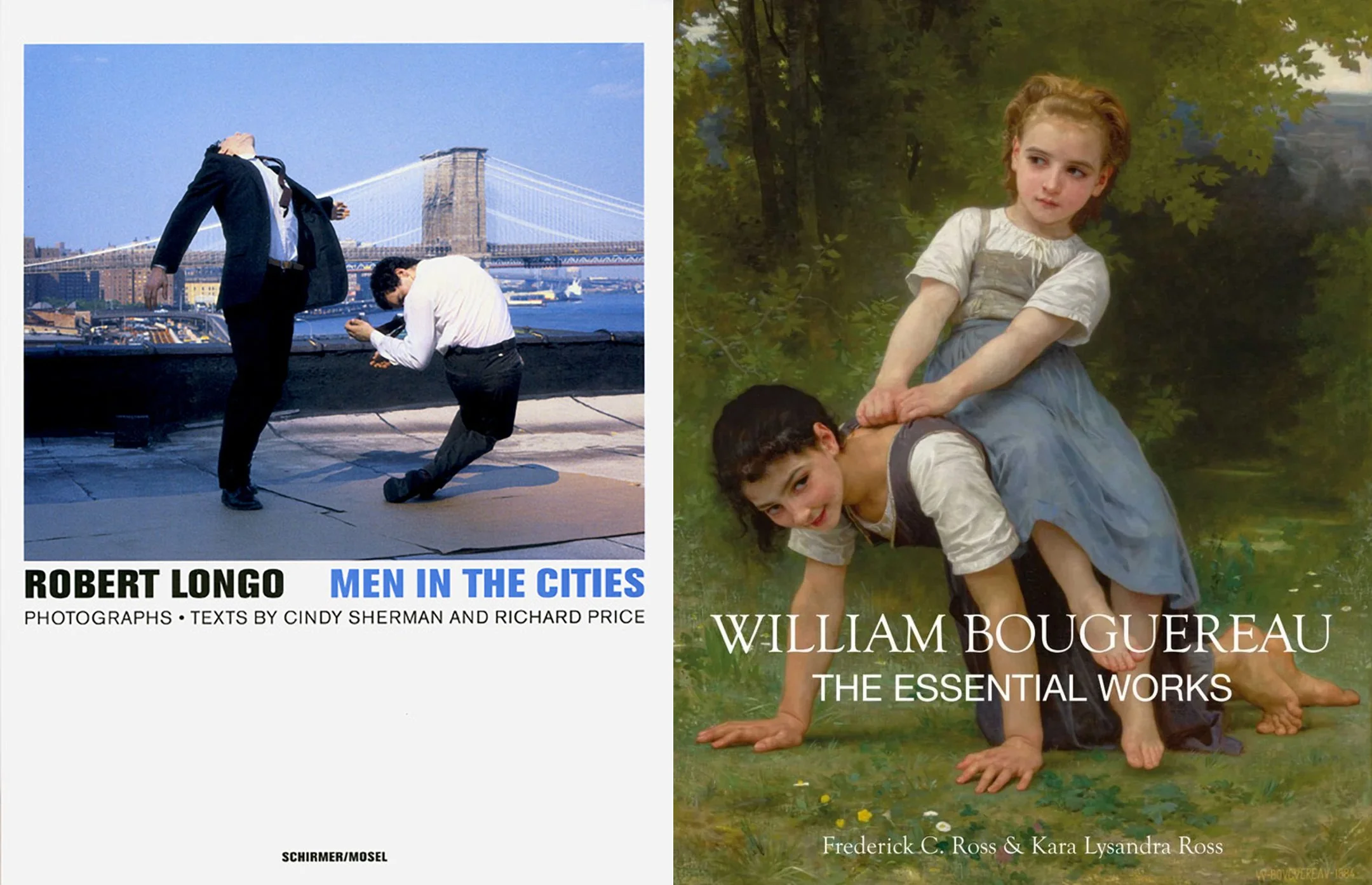
The first was Robert Longo. In his Men in the Cities drawings from the early ’80s, men and women in office clothes are caught mid-twist against blank paper, and you can’t tell if they’re dancing or falling. He made them on a Manhattan rooftop by throwing things at his friends and, it turns out, tying ropes around them and pulling. He photographed what happened, projected the photos onto paper, and drew over them. The motion was provoked, a performance dressed up as an accident.
I first fell for those drawings in my last year at Carnegie Mellon. Most of my senior paintings were figures in motion, all of them masculine stereotypes: I was trying to work out what it meant to be a man in 1992. Many of them were cowboys. Longo’s figures wore the uniform of their decade, and so did mine. It took me thirty-four years to come back to the cowboy, and this time she’s wearing strawberries.
The second was William-Adolphe Bouguereau. In Nymphs and Satyr (1873), four nymphs haul a satyr toward the water, their arms and bodies locked in a slow, turning ring. It’s painted so smoothly that a myth reads like a photograph. That’s the effect I’m after: with enough finish, a tall tale passes for testimony.
She sits somewhere between the two: Longo’s suspended moment, Bouguereau’s believable myth. The rope does the circling.
Figure Eight belongs to the Rope Tricks series, and I’m holding it for the body of work. Mostly.
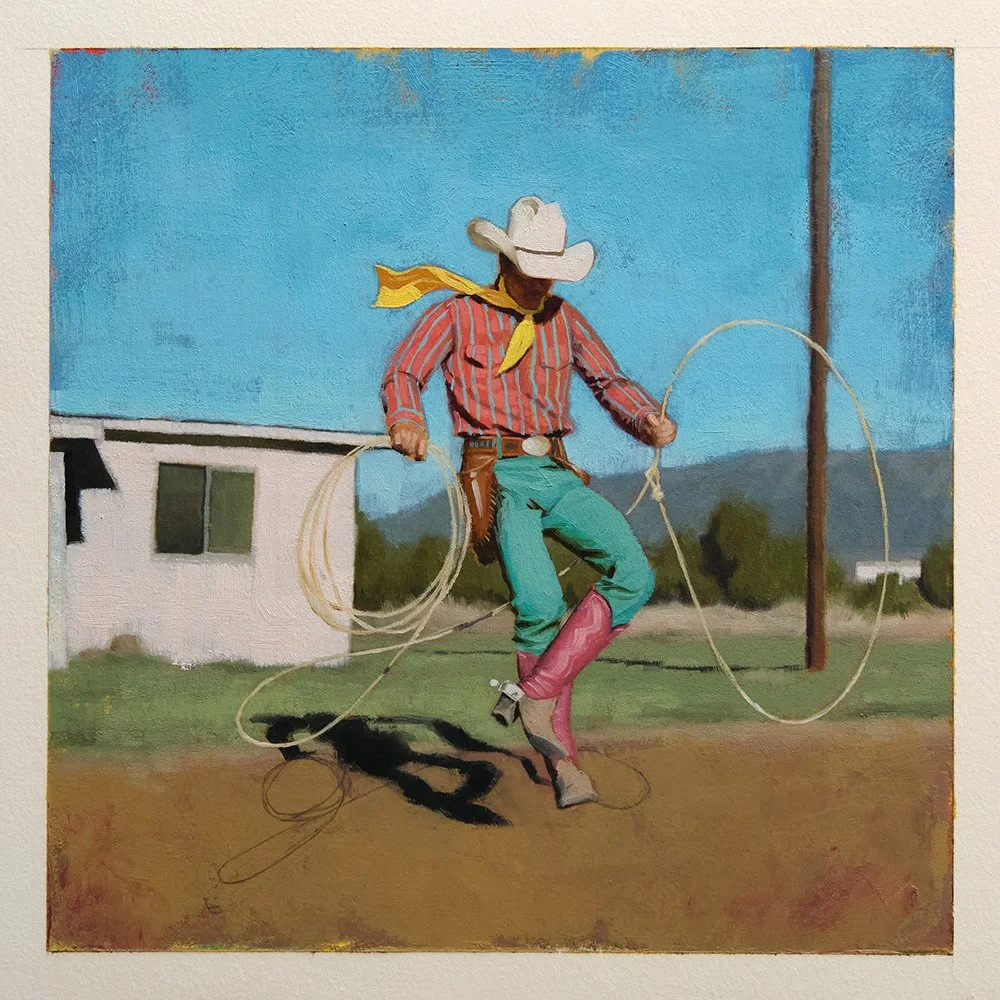
Untitled (Practice) | 10 × 10 in. | Oil on Oil Paper
Same stage, smaller scale. Before a big painting I work the idea out fast on oil paper, where nothing is precious. The sky gets scrubbed in and scraped back. The figure gets the most attention. Part of the rope is still only pencil, and I left it, because that’s where I stopped needing it.
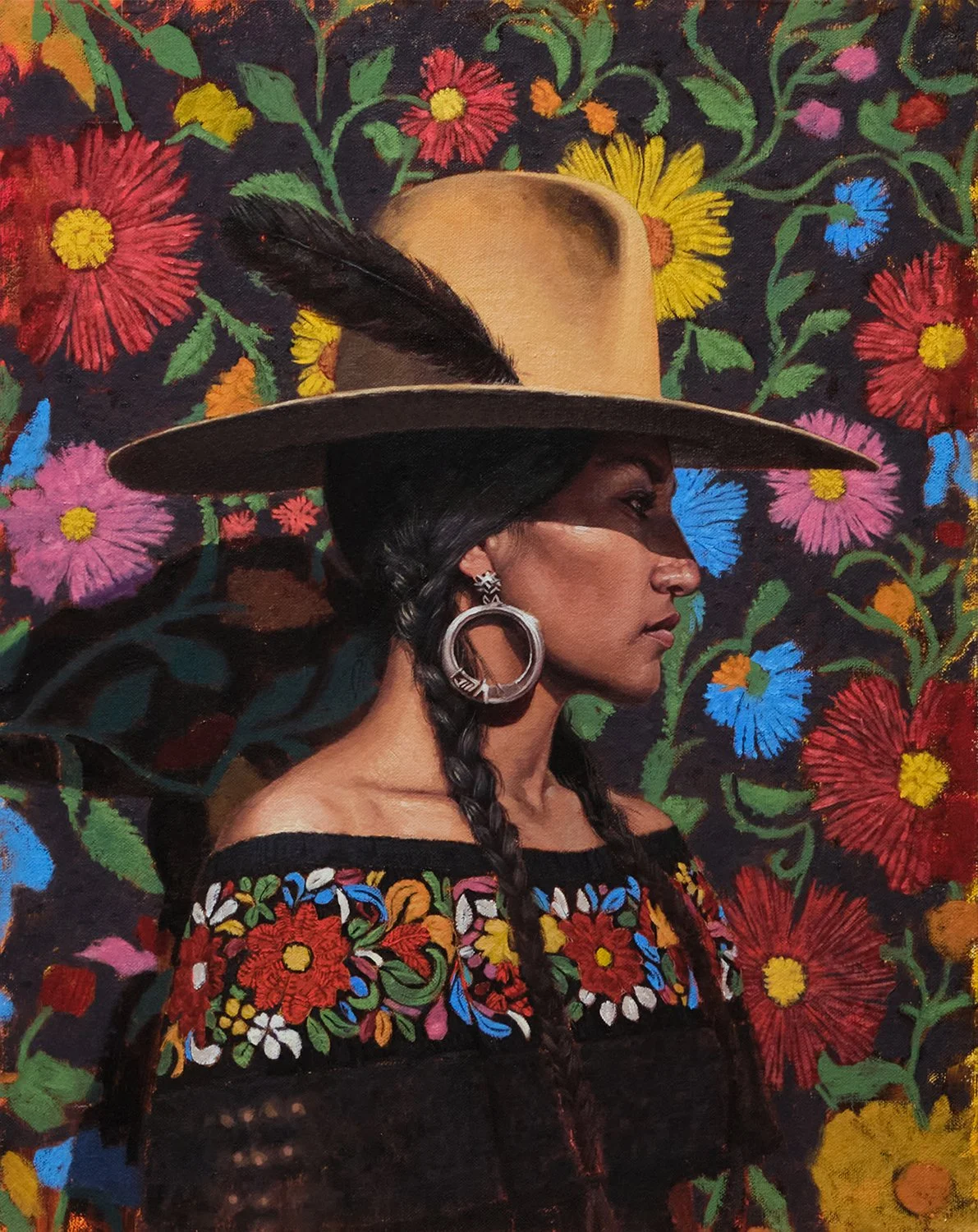
Povi goes to Tucson
You met Povi in August. She’ll hang at the 57th Mountain Oyster Club Contemporary Western Art Show & Sale in Tucson on November 22. She’s the still one of the two women in this issue: the hat, the silver hoop, the embroidered dress against a tapestry of flowers. Sitting perfectly still is its own kind of performance. If you’re in Tucson, go say hello. And if she speaks to you, you can take her home.
Povi | 16 × 20 in. | Oil on Linen | Mountain Oyster Club, Tuscon
The part nobody staged
In August I told you the Rio Grande was a thin brown thread and the cottonwoods were doing their best. Then October rained, and kept raining, and the river came back. The bosque went lush, then gold.
Every invented figure needs real ground to stand on, so this time of year I go down to the river and paint what’s there. This cottonwood came out of that. Its companion, a sunset over the water, has already found a home, and another is on the easel.
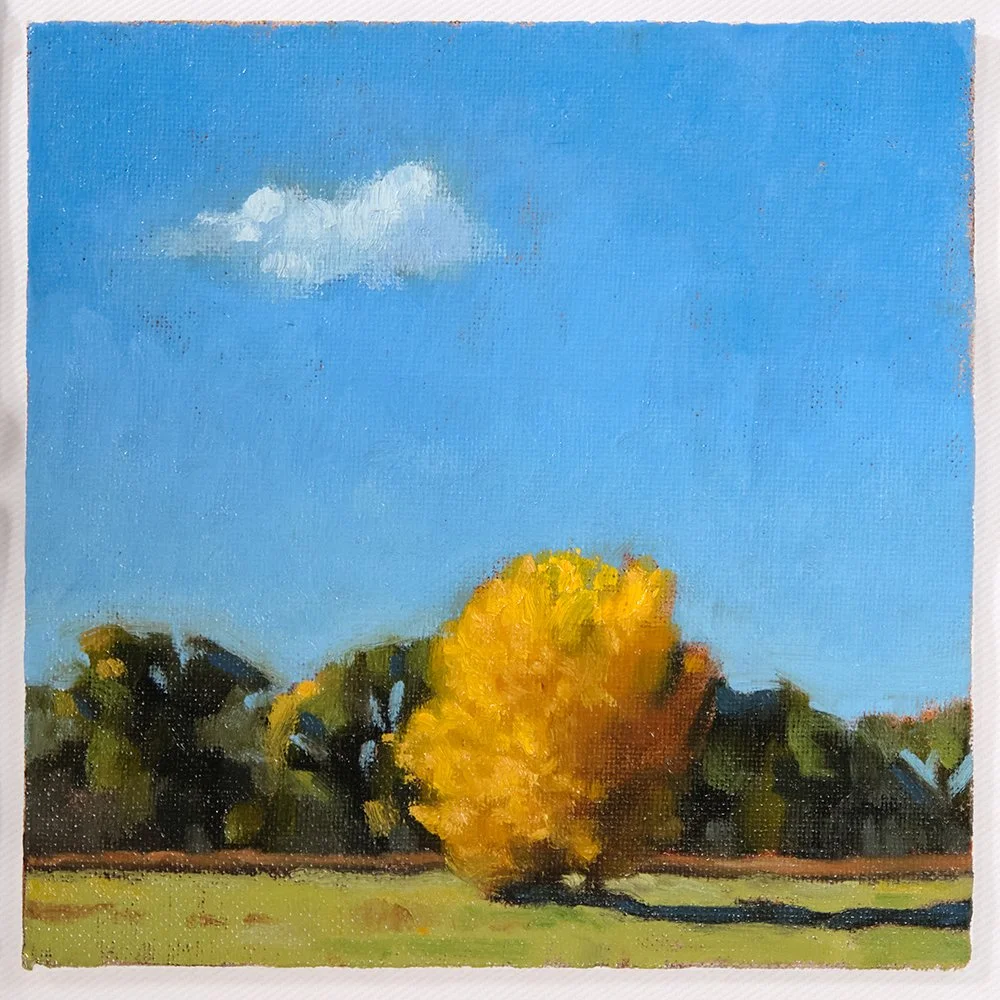
Cottonwood | 6 × 6 in. | Oil on panel
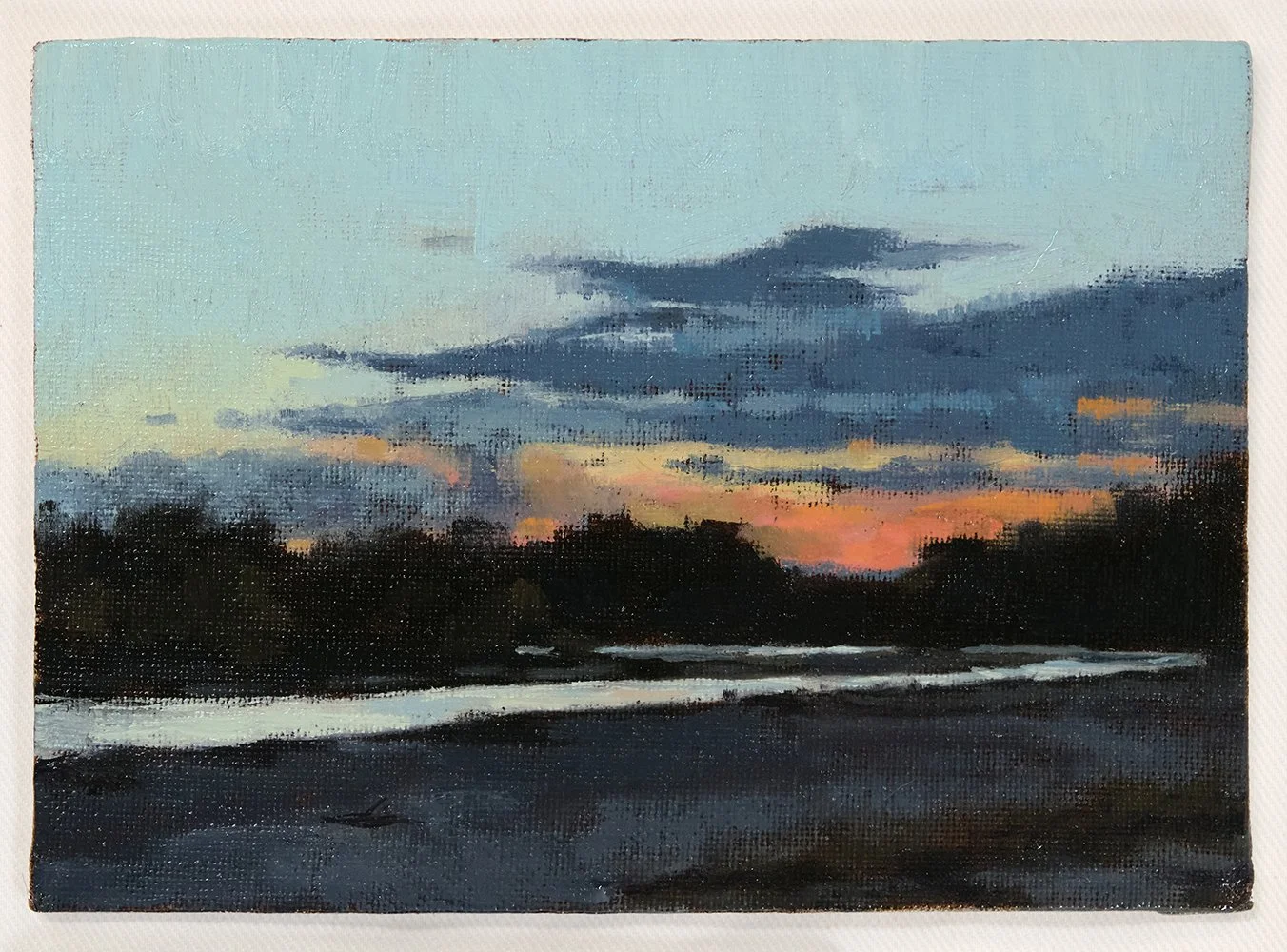
Rio Grande Sunset | 5 × 7 in. | Oil on panel | Sold
No costumes, no rope. The cottonwoods put on the only show out here that nobody had to direct.
P.S. Nothing here is behind glass. Reply if something speaks to you.

On the Studio Floor
Robert Longo: Men in the Cities, Photographs 1976–1982, the rooftop pictures behind the drawings, ropes and all. And William Bouguereau: The Essential Works. If you’re ever in Williamstown, Massachusetts, Nymphs and Satyr hangs at the Clark. It’s bigger than you think.
